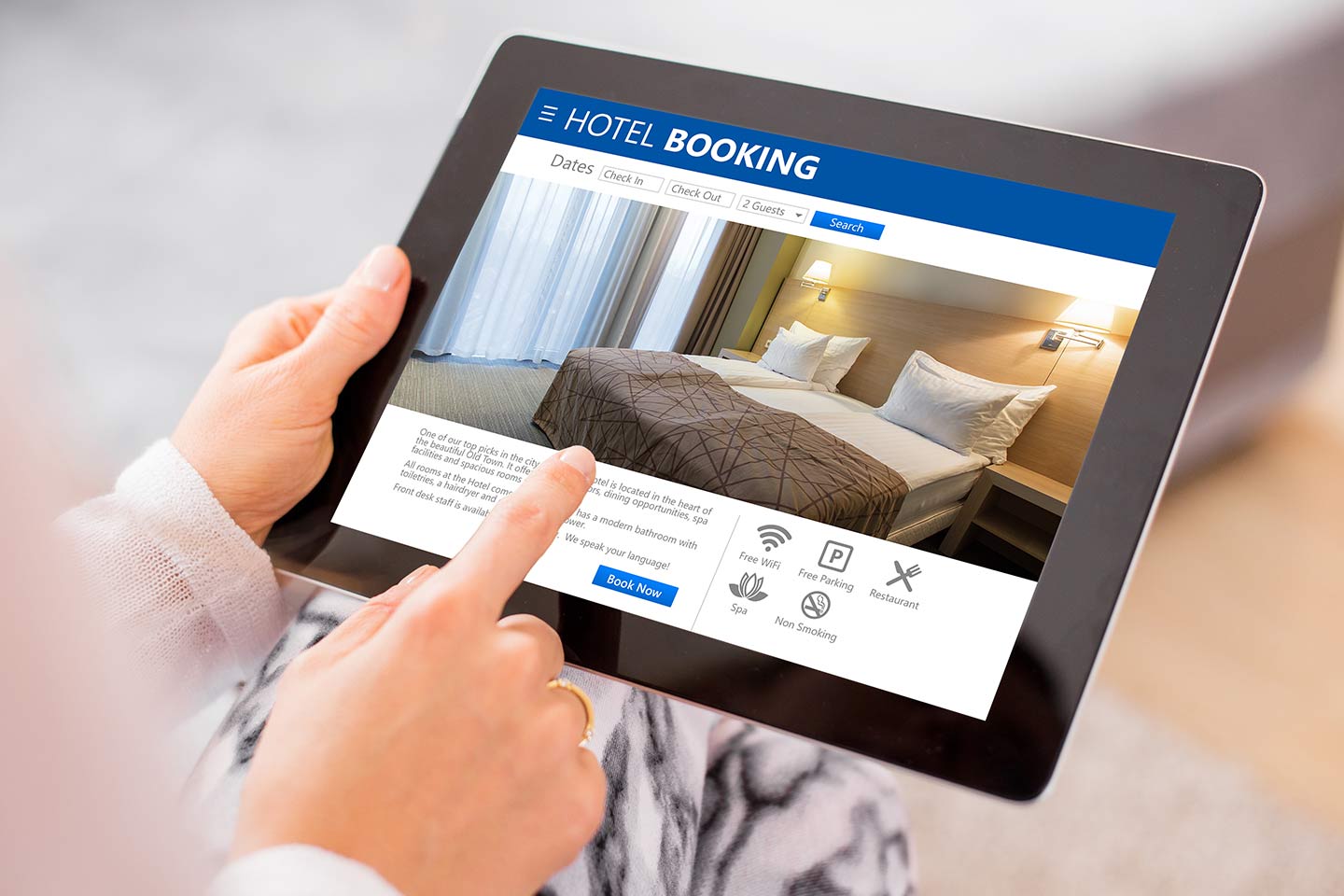
Conversion is one of the most important drivers of hotel performance, yet also one of the least understood. In the hotel context, conversion rate reflects the share of potential guests who move from browsing to actually completing a reservation. Although conversion matters across all channels, it is particularly critical for direct bookings on a hotel’s own website, where the property has the greatest control over the guest journey and the greatest ability to influence outcomes through pricing, messaging and booking conditions.
The Commercial Value of Direct Bookings
From a commercial and cost-effectiveness perspective, direct website conversion is one of the most valuable levers in the hotel industry. While the room rate a guest pays may be similar across channels, direct bookings typically generate a higher net ADR yield and contribution margin because they reduce distribution costs such as OTA commissions and intermediary fees.
Direct bookings also strengthen the hotel’s relationship with the guest by increasing opportunities for upselling and personalization and supporting long-term customer lifetime value. Improving direct conversion is therefore not simply about generating more bookings; it is about capturing more demand through the channel that often delivers the strongest profitability. Even small improvements in direct conversion can translate into meaningful financial gains, because the hotel converts a larger share of existing demand without necessarily increasing marketing spend.
Why One Conversion Number Doesn’t Tell the Whole Story
Yet hoteliers often quote a single booking conversion rate as if it were a stable, fixed metric, but it isn’t. Behind that single percentage lies a complex interaction of guest behavior, pricing decisions, demand patterns, booking conditions and channel context. Conversion shifts by season, segment, booking window, device type and the competitive environment.
A hotel may optimize rates based on demand forecasts, yet still lose bookings if guests perceive weak value, encounter restrictive conditions, or experience friction in the booking journey that pushes them toward intermediaries. Without understanding these underlying dynamics, even the most sophisticated pricing strategy can miss its mark.
A recent study published in the International Journal of Hospitality Management offers one of the most rigorous examinations of how conversion behaves in real hotel operations. Using more than 34,000 booking requests from a leisure hotel, the study treats conversion not as a single average KPI but as a dynamic outcome that changes across different demand environments throughout the year. Rather than searching for one universal explanation of conversion, it demonstrates that booking decisions depend heavily on the conditions under which guests search, evaluate offers and decide whether to commit.
Using Clustering to Capture Real Booking Contexts
To capture this complexity, the study applies a two-step analytical framework. First, machine learning is used to segment stay dates into distinct clusters that represent different demand situations. Second, logistic regression modeling is applied within each cluster to identify which factors most strongly explain whether a booking request becomes a confirmed reservation. This approach reflects a crucial insight for hotel commercial teams: conversion is shaped by shifting consumer decision contexts, not by pricing or website factors in isolation.
The results highlight that conversion drivers are not stable over time. Each demand cluster exhibits its own unique set of determinants and, furthermore, guest-related characteristics play a major role in explaining booking outcomes. In other words, a factor that strongly influences conversion in one period may have a limited impact in another. This challenges the industry’s tendency to apply one-size-fits-all assumptions about what drives conversion. Instead, conversion management must be adaptive, requiring hotels to understand which determinants matter most in each demand environment and adjust their decisions accordingly.
The key contribution of the study is not only the evidence that conversion behaves differently across demand situations, but also the framework it provides for optimization. By combining segmentation with predictive modeling, hotels can better understand when and why conversion rises or falls, for example, whether short lead times, weekday versus weekend patterns or pricing sensitivity become dominant drivers at specific times of year.
These insights are especially valuable for direct web channels, where hotels can influence conversion through controllable levers such as dynamic pricing, promotional framing, content and messaging, cancellation flexibility and offer visibility.
Coordinating Pricing and Marketing for Maximum Conversion Impact
The implications for pricing and marketing alignment are substantial. If conversion in a given cluster is driven primarily by guest profile, then messaging, rate structures and distribution tactics should be tailored to that segment’s expectations and constraints. Likewise, if conversion is highly sensitive during certain clusters, marketing spend should be timed more strategically, i.e., investing more heavily when booking propensity is naturally higher and refining communication when conversion likelihood is lower.
This is where advanced analytics offer a competitive advantage: machine learning makes it possible to detect these patterns with far greater precision than traditional reporting, thereby enabling hotels to deploy pricing and marketing interventions when they are most likely to generate maximum impact.
However, it is equally important to recognize the limits of generalizing these findings. While the analytical approach is rigorous and highly relevant, results derived from a single leisure hotel cannot automatically be applied across all properties. Every hotel operates within a unique ecosystem shaped by location, brand positioning, guest mix, channel strategy, competitive set, seasonality and operational constraints. A conversion driver that matters in a resort destination may behave very differently in an urban business hotel, a convention property or a luxury boutique hotel with strong repeat clientele. The real value lies in adopting the methodology and applying it to each property’s own context, not copying the exact results.

Hotels Must Rely on Their Own Deep Data
This is why hotels must rely on their own data to uncover their own conversion patterns and decision rules. Optimizing conversion, especially direct conversion, requires more than surface-level KPIs. It requires collecting and analyzing in-depth “deep data” that captures the full context of booking behavior, including customer segments, search and booking windows, price exposure and parity conditions, restriction logic, channel pathways and competitive dynamics. Crucially, it must also incorporate marketing activity data, because conversion is shaped not only by what guests see on the booking engine, but also by how and why they arrived there in the first place.
In practice, this means tracking not only whether a guest booked, but also the type, timing and channel of promotion or campaign exposure that influenced the booking journey. Conversion can differ dramatically depending on whether demand was generated through Google Hotel Ads, metasearch, paid search, retargeting, email marketing, loyalty campaigns, OTA visibility boosts, social media promotions, influencer partnerships or offline brand initiatives.
Each marketing activity attracts different guest profiles with different levels of intent, price sensitivity and booking urgency, leading to fundamentally different conversion outcomes. Without integrating campaign-level data into conversion analysis, hotels risk misinterpreting changes in conversion as a pricing problem when the real driver is a shift in marketing mix, targeting or traffic quality.
EHL Hospitality Business Intelligence Lab to Support Hotels
This is where the EHL Hospitality Business Intelligence Lab can create significant value. By helping hotels collect the right deep data, structure it effectively and apply advanced analytical methods such as clustering, predictive modeling and behavioral segmentation, the Lab - in partnership with Hotelnet - supports a shift from static reporting to dynamic, context-aware optimization. With the right intelligence, hotels can move beyond generic industry averages and one-size-fits-all assumptions, and instead, develop property-specific strategies that strengthen pricing decisions and improve marketing effectiveness to enhance the profitability of direct channels.
If you would like to know more about the EHL Hospitality Business Intelligence Lab, please contact Dr. Cindy Heo.