Industry awards and nominations have become increasingly prominent in the craft beer sector, as breweries seek to differentiate themselves in an increasingly competitive and fragmented landscape. With hundreds of breweries competing for attention, recognition offers a visible way to stand out, but its real value is often misunderstood.
In industries such as craft beer, wine and gastronomy, product quality is difficult to evaluate before consumption. Taste is experiential, subjective, and uncertain. As a result, consumers rely on external signals, such as awards, ratings, and expert endorsements to guide their choices. This is particularly relevant in fast-growing markets like Swiss craft beer, where proliferation creates both diversity and confusion.
Industry awards therefore play a critical signaling role: they communicate quality and provide reassurance that a product has been validated by experts. The article discusses the role of such awards in elevating the status of an industry such as beer to an experiential and high-end product used in fine-dining.
From Everyday Beverage to Gastronomic Product
However, the role of awards in the Swiss beer industry goes beyond guiding individual consumer choices. It contributes to a broader transformation: the repositioning of beer itself.
Historically, beer has often been perceived as a “blue-collar” or everyday beverage. Yet the rapid growth of Swiss craft breweries, now numbering in the thousands, has introduced a new generation of producers focused on innovation, terroir and high-end recipes.
These breweries increasingly develop:
-
complex flavor profiles,
-
limited editions (“grand cru”-like beers),
-
experimental brewing techniques.
In this context, the Swiss Beer Award plays a critical role not only in recognizing individual excellence, but in elevating the status of the entire category. By applying rigorous evaluation standards and highlighting craftsmanship, it helps frame beer as a product that belongs alongside wine in gastronomic settings.
This creates value for both the winning breweries and for the Swiss beer industry as a whole.
Industry Awards as Bridges to High-End Gastronomy
This repositioning has direct implications for food & beverage stakeholders, particularly in gastronomy.
Switzerland has one of the highest concentrations of fine dining establishments in the world, with over 130 Michelin-starred restaurants, reflecting a strong culture of culinary excellence. It also has the world’s highest number of breweries per capita among which 500 are reviewed for every edition of the Swiss Beer Award.
The result of this fascinating ecosystem is that the Swiss dining landscape is progressively incorporating more diverse beverage pairings, including curated beer selections. Some gourmet restaurants such as Zurich’s Fork & Bottle now explicitly offer beer in fine dining tasting menus, reflecting a growing recognition of beer and food pairing as a sophisticated dining concept.
Within this evolving ecosystem, awards such as the Swiss Beer Award serve as:
-
Legitimacy markers for chefs and restaurants selecting beers,
-
Quality guarantees for diners exploring alternative pairings,
-
Gateways for inclusion in premium dining environments.
In this sense, the industry award signals quality and also enables category upgrading, allowing beer to enter spaces traditionally dominated by wine.
The Role of Awards in Validating Craft Beer Quality
Who drives the premium positioning of beer? The value of awards such as the Swiss Beer Award does not lie solely in how they inform individual consumer choices. More importantly, they shape how different stakeholders contribute to the premium positioning of beer as a gastronomic product. For consumers, industry awards continue to function as important decision shortcuts. Less experienced drinkers rely on visible signals such as medals displayed on bottles to reduce uncertainty and identify quality products. However, in the context of premiumization, this role extends further; awards help reposition beer from an everyday beverage to a product associated with craftsmanship and refinement.
For more experienced consumers, awards play a more nuanced role. Rather than acting as simple cues, they serve as indicators of credibility, reinforcing perceptions of authenticity, innovation and expertise. In this way, awards contribute to shaping expectations around what “high-quality beer” means—an essential step in moving beer closer to the standards of wine and gastronomy.
Crucially, the transformation of beer into a higher-end product depends even more on intermediary actors within the food & beverage ecosystem:
-
Restaurants and chefs play a central role in legitimizing beer in fine dining contexts. Awards provide them with a credible framework to select and justify the inclusion of beers in curated menus and pairing experiences.
-
Distributors and HORECA operators rely on awards as signals of consistency and quality when deciding which products to promote and position within premium segments.
-
Event organizers and industry platforms use awards to curate participation, thereby reinforcing which breweries and which products are associated with excellence.
What distinguishes the Swiss Beer Award is that its recognition is visible and transferable. Medals are often displayed directly on packaging, transforming expert evaluation into a tangible signal that travels across contexts from retail shelves to restaurant menus.
As a result, industry awards do not merely influence purchasing decisions; they coordinate perceptions across stakeholders, enabling beer to progressively enter higher-value environments such as fine dining and gastronomy.

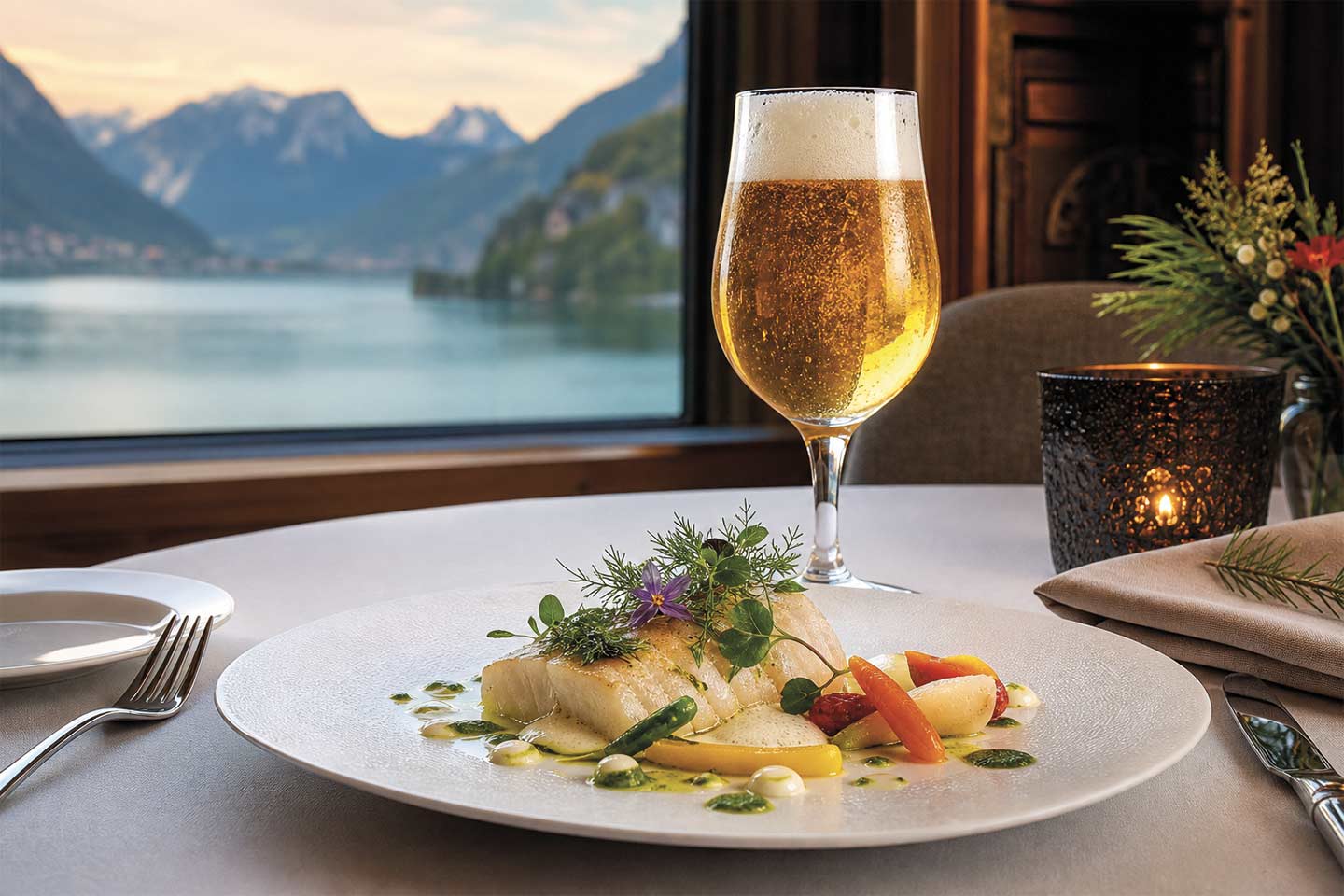
Illustration generated with AI.
Industry Perceptions: Between Aspiration and Category Elevation
Within the brewing community, awards generate mixed reactions, but this tension reflects a deeper transformation currently shaping the industry.
On one hand, awards such as the Swiss Beer Award create aspirational benchmarks. Even for non-winning breweries, they contribute to raising expectations around quality, craftsmanship and consistency. In doing so, they support a broader upgrading of the category, encouraging breweries to align with standards that resonate not only with consumers, but increasingly with gastronomy professionals. For many breweries, awards therefore represent more than recognition; they are a pathway to legitimacy in higher-value market segments, including premium retail and fine dining.
On the other hand, some breweries remain skeptical. Critics argue that competitions may favor certain styles or evaluation criteria, potentially encouraging standardization and limiting creative expression. From this perspective, awards could be seen as shaping how quality is judged alongside what types of products are considered legitimate or desirable.
Yet this tension reveals a critical insight: industry awards are not only signals of quality, they are institutions that actively shape the evolution and positioning of the industry.
Key Takeaway
Beer is present even within leading gastronomic institutions, but remains secondary to wine in curated dining experiences. While restaurants may offer beer as part of their beverage selection, it is rarely positioned as a central element of pairing strategies or gastronomic storytelling. This highlights a broader gap between the increasing sophistication of Swiss craft beer and its integration into fine dining contexts. In this respect, the Swiss Beer Award could play a pivotal role. By providing credible, standardized signals of quality, it offers a mechanism through which award-winning beers can gain legitimacy in high-end gastronomy and progressively be incorporated into curated dining experiences.
Industry awards and recognitions are thus more than symbolic distinctions. In the Swiss beer industry, they function as strategic levers of transformation.
As the industry becomes more competitive and more premium-oriented, the role of awards will continue to grow as markers of excellence and as mechanisms that elevate entire categories.


 The Strategic Value of Industry Awards Across the Business Lifecycle
In the gastronomic and broader food and beverage industries, awards function as powerful market signals. Distinctions such as Michelin Stars, Gambero Rosso rankings, The World’s 50 Best Restaurants, and comparable certification systems have become widely recognized indicators of prestige and professional legitimacy. For consumers facing high uncertainty and information overload, these industry awards provide simple and trusted shortcuts for decision-making, guiding choices about where to dine, what to purchase, and how much they are willing to pay.
 When Brand Recognition Travels: The Ripple Effects of Industry Awards
Winning an industry award is often seen as the culmination of hard work and excellence. Yet the impact of recognition rarely stops with the winner. Drawing on research into awards such as the Swiss Beer Awards and the World's 50 Best Restaurants, Dr. Margarita Cruz explores how awards can influence business ecosystems, industries and even shape future definitions of excellence. What if the true value of an award lies not in the trophy itself, but in how far its legitimacy can travel?
Reuse and reproduction permitted with full attribution to the original author and inclusion of a link to the original publication. All other rights reserved.