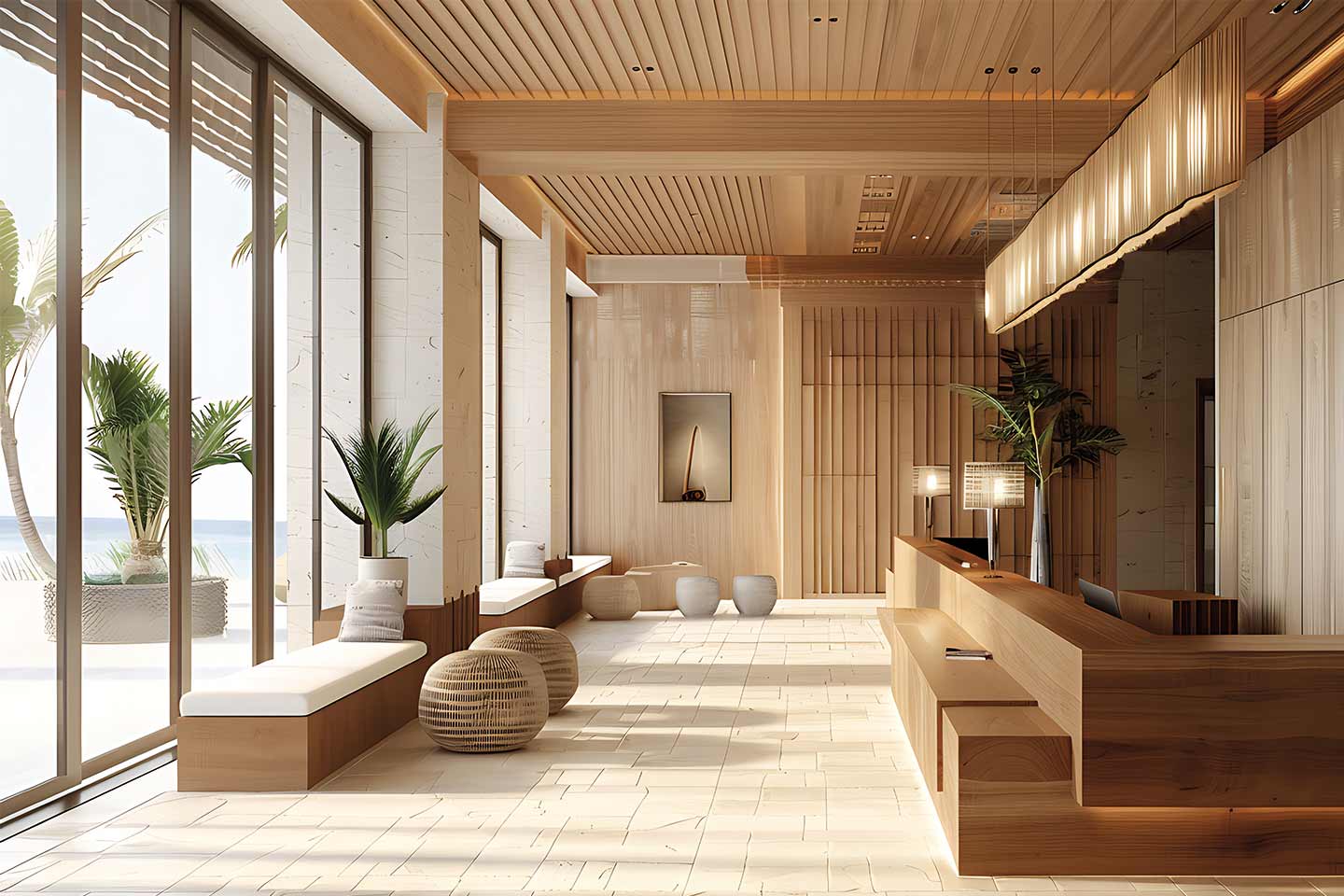
Luxury hotels have always been associated with the grandeur of glittering chandeliers, lavish rooms, opulent lobbies and overly attentive service. Yet, today’s most affluent travelers are seeking something far subtler and understated, commonly referred to as quiet luxury hospitality. In the hotel industry, quiet luxury has come to mean seamless service, simple yet high-quality materials and cuisine crafted from local ingredients in discrete locations. While quiet luxury has become a trending topic, its meaning and application in hospitality are still evolving and call for a deeper understanding.
A team of talented EHL students (Jumana Alshanbari, Virginia Savoca, Dhhra Soni, Tala Attar, Jan De Iaco and Emma Fogagnolo) explored this topic in depth during their Student Business Project (SBP) in the final semester of the Bachelor of Science program. Their outstanding work, which won the Best SBP Award among more than 70 projects, combined rigorous research and creative insight. The team conducted 65 interviews with sustainable-luxury guests, business travelers and executives, another 18 expert interviews, benchmarked 14 leading hotel properties, analyzed 869 online reviews through data scraping and reviewed over 100 industry reports and articles to finally address the question: What are the tangible ways to incorporate quiet luxury into the hotel experience?
The following points summarize the key findings.
Location, Discretion, Localization!
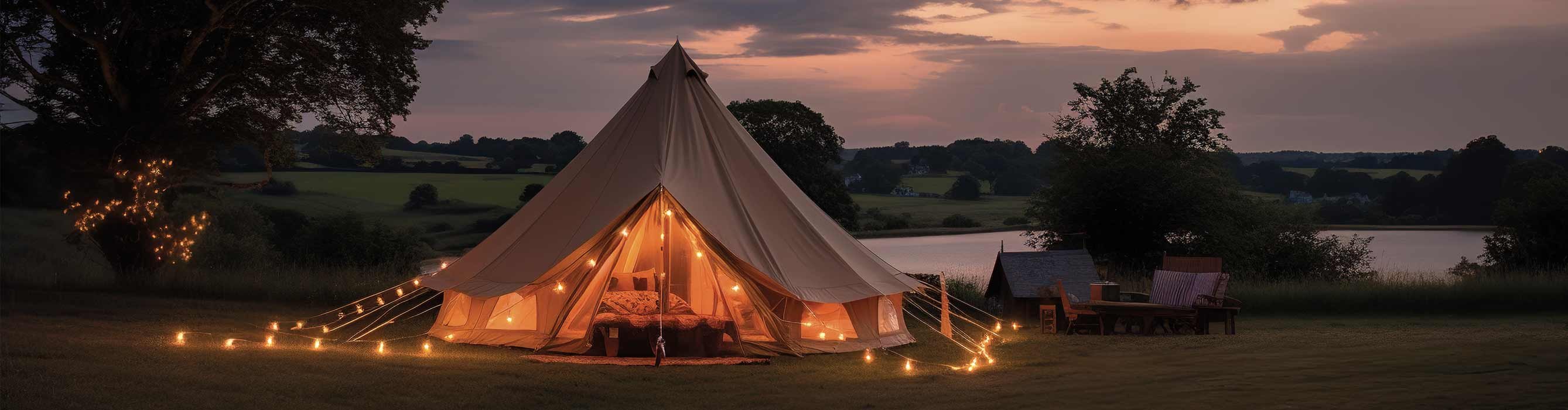
Quiet luxury hospitality is evident in the destination choices of today’s traveler. Off-the-grid, secluded destinations are increasingly favored over club destinations and crowded “hot spots”. Big chains have gotten on the bandwagon by acquiring and building hotels in discrete locations. Leading industry players have emphasized that today’s travelers desire exclusivity and seclusion, driving these corporations to expand into these emerging niches. In fact, Hyatt Hotels and Small Luxury Hotels of the World (SLH) are both partnering with Under Canvas, which specializes in discreet, secluded accommodations, in order to expand their offerings.
Even in more well-known locations, quiet luxury hospitality can be achieved through discreet, private entrances and hidden passages, which signal exclusivity and seclusion. This creates the ambiance of an escape location while benefiting from the attractions of developed tourist sites. For instance, the Mandarin Oriental Hyde Park is situated in London, which is obviously a popular tourist destination. However, it’s hidden quietly, devoid of a lavish entryway and thus feels more residential.
Travel embedded in local and cultural exploration has also gained popularity recently. Guests appreciate accommodation that embraces and respects the location, as opposed to a generic hotel that could be replicated anywhere in the world. Increasingly, hotels are partnering with local communities to ensure that their offerings truly capture the essence of the destination, which enhances their authenticity. In one such example, SLH’s agriturismo, called Relais Roncolo 1888, sells the wares of local craftspeople in its gift shop; moreover, their toiletries are locally sourced.
Guests don’t want generic luxury anymore—they want something distinctly local.
–
Diogo Lopes, Marketing Director, São Lourenço do Barrocal
Seamless Service, Timeless Design
A web scraping of over 869 customer reviews across seven luxury hospitality properties in northern Italy reveals that luxury customers appreciate service that is warm and welcoming, rather than formal and excessive, with some even praising owners or staff members by name. This finding is also echoed in the interviews with luxury guests and hospitality experts.
“You can have a wonderful place like us. You can be luxury. You can have all your logos and everything. But if you are not smiling, you are not welcoming, you are not warm — luxury is nothing without that.”
-Michael, Relais Roncolo 1888 Hotel tour guide
Modern luxury travelers prefer high-quality and minimalist interiors over opulent and extravagant designs. They also value hotels that integrate the local character and culture into their interior design, such as using local woods and marbles in the construction process. In rural hospitality, Diogo Lopes, Director of Marketing at São Lourenço do Barrocal in Portugal, warns that ultra-modern or ostentatious finishes such as white marble or gold fixtures can feel “out of place” in historic countryside properties. Instead, he advocates for reclaimed wood, artisanal textiles and vernacular design that honors a property’s DNA. Similarly, vintage and flea-market pieces are making a comeback, adding character and history that avoids the sterility of mass production. But quiet hospitality luxury goes beyond materials; it also manifests in spatial design. Communal kitchens, such as the one at B&B Hotel Verdenoce in Emilia-Romagna, creates a sense of trust, freedom and a home-like interaction with other guests.
Furthermore, in luxury camp resorts (i.e., glamping), campfire circles replace grand lobbies, creating an intimate and connected atmosphere. Finally, wellness and technology follow the same principle of discretion: spa-like bathrooms, circadian lighting and clutter-free spaces offer tranquility and indeed “quietness”. However, Patrícia David, Quality Manager at São Lourenço do Barrocal, stresses that technology should remain invisible yet functional. Guests, she explains, “don’t need to see it, but want to use it”.
Moments That Matter
When it comes to activities and experiences, quiet luxury hospitality is steeped in authenticity, promising guests an immersion into the local culture. Conspicuous luxury entails activities that are spectacles, lacking depth, such as high-profile events or curated social calendars. On the other hand, quiet luxury experiences are those that forge a connection between people and place, be it vineyard harvests at dawn, picking herbs and vegetables for a family meal or enjoying the company of fellow travelers by a fire pit in an open field.
High adrenaline activities, such as beach-front watersports or setting sail in private yachts are less appealing in the eyes of today’s luxury traveler. Guests seek a slow reprieve such as walking through sensorial paths, canoeing through hidden waterways or participating in chakra healing and yoga workshops.
Michelin-starred restaurants and hyper-expensive cocktail bars are often perceived as outdated in their opulence; guests today envision luxury as a more genuine experience such as farm-to-fork restaurants or local cooking classes. Quiet luxury experiences are more lowkey and offer immediate immersion into the pace, palate and culture of the destination.
Luxury Hospitality: Final Insights
To sum up, unostentatious luxury hospitality can be effectively implemented in hotels at every stage. This starts with selecting the property and its location and extends to building and designing the establishment while developing unique and local experiences and activities.
Recommendations:
-
Choose a secluded yet timeless location.
-
Build an exclusive, homey entryway.
-
Incorporate local building materials and furniture.
-
Train staff to be warm and welcoming while personalizing each guest’s experience.
-
Develop slow and authentic experiences for guests.
References
Beadle, C. (2024, November 5). Off-the-grid experiences – unlocking this new travel trend. Booking.com for Partners. https://partner.booking.com/en-us/click-magazine/trends-insights/off-grid-travel-experiences
Booking.com. (n.d.). Verdenoce Agriturismo B&B – Guest reviews. Booking.com. Retrieved April 16, 2025, from https://www.booking.com/hotel/it/verdenoce-agriturismo-b-amp-b.en.html
Chen, X. (2025). Investigating the consumer purchase motivation of quiet luxury brand. https://www.arcjournals.org/pdfs/ijmsr/v13-i7/1.pdf
eHotelier. (2025, March 6). The hotel design secrets that attract the ultra-wealthy. eHotelier. https://insights.ehotelier.com/insights/2025/03/06/the-hotel-design-secrets-that-attract-the-ultra-wealthy/
Graber, J. (2024b, March 29). Hospitality experts talk ‘glamping’ trend impact on hotels. Hotel Dive. https://www.hoteldive.com/news/glamping-trend-hotels/711798/
Hand, K. (2023, August 10). Hospitality and quiet luxury: the siren song for today’s travelers. https://www.linkedin.com/pulse/hospitality-quiet-luxury-siren-song-todays-travelers-karly-hand/.
EHL Faculty. (2024, December 2). Hospitality Outlook Report 2025.https://hospitalityinsights.ehl.edu/hubfs/Blog-EHL-Insights/Documents-EHL-Insights/HospitalityOutlook2025_InsightsReport.pdf

Pictured from left to right are: Virginia Savoca, Jumana Alshanbari, Emma Fogagnolo, Tala Attar, Jan De Iaco, and Dhhra Sonia.