
The global foodservice sector enters 2026 facing a convergence of pressures and unprecedented opportunity.
The biggest takeaway from the newly released 2025 Global Foodservice Outlook is striking: the industry does not lack ideas; it lacks integration. Innovation, sustainability and digital/AI capabilities are advancing across restaurants, hotels, catering operations and quick-service outlets worldwide, but too often in parallel rather than as a connected operating system. Firms that learn to link these capabilities will shape the next cycle of transformation.
Three critical insights emerge from the research:
1. Innovation is active but structurally uneven.
Most operators adapt constantly by launching new menus, refining workflows and upgrading equipment but few convert this activity into strategic direction-setting.
The sector innovates to cope with rising costs and labor shortages, not to define its future.
2. Sustainability progress is stronger in operational areas than systemic ones.
Food waste management, energy efficiency or sustainable sourcing score moderately well, but measurement, circularity, governance and reporting remain weak.
Around one in five businesses reported that they are not currently implementing sustainability initiatives and have no plans to do so in the future—they are not lagging behind; they are opting out.
3. Digitalization is far ahead of AI, yet both remain under-integrated.
Digital tools are everywhere (e.g., POS systems, delivery apps, pricing platforms, etc.) but data flows are siloed, and AI adoption lags a full cycle behind digital transformation.
Over half of surveyed firms do not plan to introduce AI as a strategic priority.
These dynamics create a sector that is innovative in practice but conservative in structure and that must now learn to operate amid deep uncertainty.
Inside the Study: A Global, First-of-its-Kind Foodservice Outlook
The executive report draws on insights from the 2025 STREST survey of foodservice operations, a research project designed and led by Dr. Carlos Martin-Rios and Julneth Rogenhofer at EHL Hospitality Business School.
It is the first study to cover all commercial foodservice activities at a global level, spanning hotel restaurants, casual and fine dining, cafés and pubs, fast food, quick service, cafeterias, food courts, food trucks, catering and event services, and travel/transport operations.
The survey was fielded worldwide between April and July 2025, offered in seven languages, and reached senior leaders (owners, CEOs, general managers, operations directors, chefs, F&B managers) ensuring that results reflect organizational-level decision-making. Responses were collected via standardized, multi-item Likert scales measuring capabilities, perceived effectiveness and organizational priorities across 1,207 foodservice businesses.
The analysis is intentionally high-level and descriptive, and highlights directional patterns rather than statistical claims. It serves as a strategic compass for leaders navigating rapid transformation.
Sustainability is Advancing, but Fragmented
Sustainability is progressing, but not evenly. Operators perform strongest where impacts are visible, measurable, professionally oriented and operationally straightforward. This includes food waste management, energy efficiency, waste and packaging practices, and resource-efficient appliances. Scores in these areas hover around 3.3–3.5 out of 5, indicating moderate maturity.
But we’re merely scratching the surface. Measurement and circularity, governance and reporting systems score closer to 3.0. This indicates that there are structural gaps that must be closed in order to meet rising expectations with regard to transparency and ESG accountability.
One of the starkest findings is that approximately 20% of businesses report that they are not currently involved in sustainability initiatives, nor are they planning to implement any. This creates a two-speed sustainability landscape: early movers pushing into circularity and regenerative approaches, while a sizeable segment remains entirely disengaged.
The report introduces the Sustainability Capability Stack, which helps explain why change often stalls. Sustainability is most successful when built as a system comprising training, procurement, operations, energy and waste—not when individual parts are piled on top of one another as isolated projects. Key barriers include disconnection from pricing and costing, limited operational influence of sustainability teams, supplier variability and weak data integration.
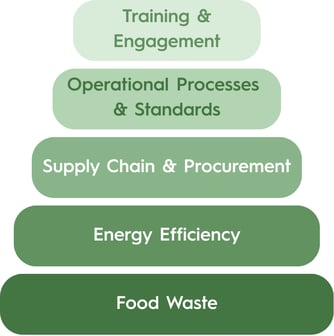 Figure 1: Sustainability Capability Stack (extract from the report)
Key message: Sustainability works when it becomes operational not ornamental. |
AI & Digital Technology are Everywhere, yet Under-Integrated
Digital tools have become basic infrastructure: POS systems, distribution apps, digital marketing, pricing tools and online ordering platforms. But AI remains in its early stages, constrained by poor data hygiene, legacy infrastructure, capability gaps and vendor dependence.
Our report presents a Technology Capability Stack with four layers: back-office automation (inventory, accounting, HR), customer-facing AI (ordering apps, robotics, service interfaces), digital marketing and pricing technologies, and digital distribution platforms.
Adoption of AI and digital tools is growing, but effectiveness remains modest. Digital marketing leads the way at 3.32/5, while core AI functions, including AI-based service delivery (3.15/5), back-office automation (3.04/5) and digital distribution (2.97/5) lag behind. Most AI projects remain pilots rather than embedded capabilities.
One point that stood out was that over half of surveyed firms do not plan to introduce AI as a strategic priority. Among those adopting digital tools, many accumulate systems without connecting them, which creates siloed data, duplicated work and limited insight.
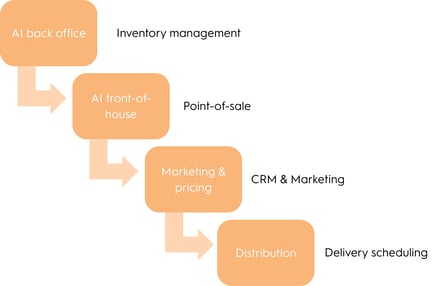 Figure 2: Technology Capability Stack (extract from the report)
Key message: AI will not fix operational chaos; it will amplify it. |
Why This Report Matters Now
This executive report is unique in four ways:
- It is the first global, cross-segment analysis of commercial foodservice, spanning the entire operating landscape from food trucks to fine dining.
- It connects innovation, sustainability and AI/digitalization, showing how these must be integrated rather than managed separately.
- It reveals not just what firms are doing, but why capabilities stall due to weak integration, limited data infrastructure, uneven sustainability structures and capability gaps.
- It arrives at a moment when uncertainty is omnipresent: volatile costs, labor constraints, regulatory pressure, shifting consumer expectations and accelerating technology.
Join The Conversation
The full 2025 Global Foodservice Outlook is free to access, share and discuss. It offers an unprecedented overview of where the sector stands—and where it is headed.
Share it with colleagues and partners.
Use it to spark discussions on transformation, sustainability and AI in foodservice.
The future of foodservice is now. This report is your guide to navigating it.